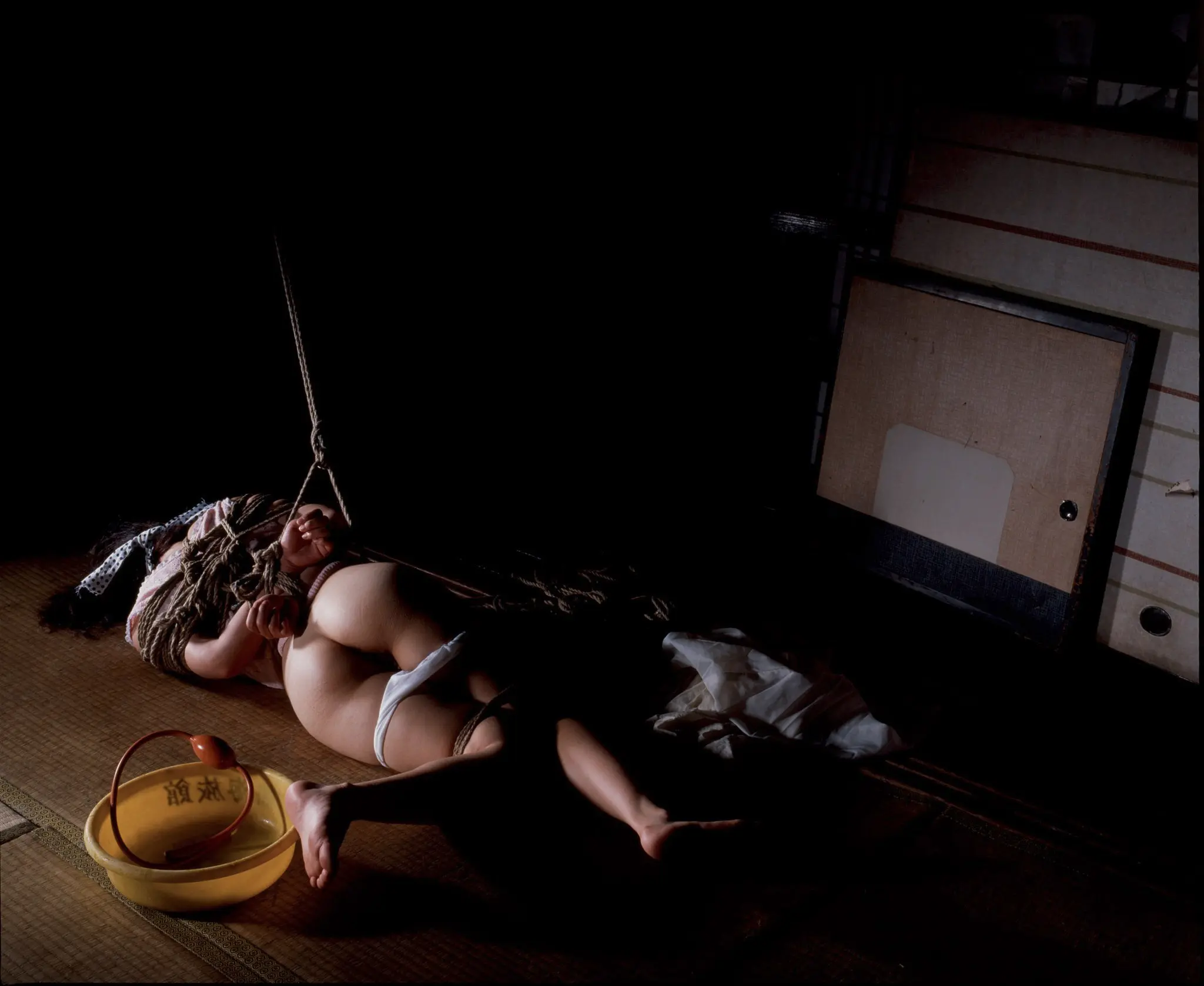
Nureki Chimuo (1930–2013) was a Japanese bakushi whose nearly six-decade career shaped the origins, growth, and global spread of what we now call shibari kinbaku.
More than twenty years ago, I came across a set of images that stopped me cold: Asian women in ropes, bound in bondage. But these weren’t ordinary shots. There was something raw, magnetic, almost overwhelming about them. The aesthetic and the emotional weight stood apart from the usual SM imagery. Years later, I discovered the artist behind them was Nureki Chimuo, and that this style of bondage had a name: shibari. That revelation set me on a path I’m still following today.
Nureki emerged on the Japanese shibari scene during the postwar years, beginning his career under the guidance of the legendary Kitan Club, edited by Minomura Kou. Minomura’s philosophy and approach left a powerful impression on the young Nureki, shaping his early experiments and fueling his evolution as a rope artist.
At that time, shibari was already branching into different schools. On one side, masters such as Osada Eikichi and Akechi Denki leaned toward visual artistry, producing elaborate, theatrical displays with sharp technical precision—a kind of polished composition designed for spectacle. On the other, figures like Minomura Kou, and later Nureki Chimuo himself, emphasized intimacy over showmanship, focusing on the private, personal connection created in the act of tying. This sensibility resonated strongly with figures such as Oniroku Dan and Yukimura Haruki as well.
Kinbiken
Kinbiken became the banner for much of Nureki’s life’s work. It began as a series of small rope salons—intimate gatherings where he shared and demonstrated his kinbaku. Over time, it developed into a video collection that remains a cornerstone of his legacy.
The term itself comes from Kinbakubi kenkyokai (literally, “research society for the beauty of kinbaku”), a name that reveals Nureki’s guiding philosophy: kinbaku as an art of beauty and depth. His most famous disciple, Akira Naka, spent years observing these salons, assisting, and absorbing lessons before ever taking up the rope himself.
For Nureki, the visual arrangement always took second place to the emotional resonance of the person being tied. What may appear today as rough, simple, or restrained was, at the time, revolutionary. He pulled shibari away from the confines of the adult entertainment industry and reframed it as a personal, erotic, and highly intimate practice.
When it came to public performance, however, Nureki avoided the stage. In an interview with Tokyo Bound, he explained his stance without hesitation:
“I don’t do shows or live performances. I don’t want to display my kinbaku in front of people who don’t understand it.”
For Nureki Chimuo, shibari was never about spectacle—it was about connection. That quiet conviction became the hallmark of his art and remains a defining part of the legacy he left behind.