Shibari Dojo | Keynote Lectures (講義)
Essential Readings for Shibari Safety
A Generational Shift
The impact of lockdowns and the shutdown of public activity during COVID hit Japan’s professional shibari industry hard.
Several factors came together. On one hand, there were economic pressures caused by the lack of activity itself, made worse in Japan by the introduction of the new AV law, which almost brought shibari-themed adult video production to a standstill.
At the same time, the industry missed its technological moment. While the rest of the world quickly pivoted online, shibari—whether due to language, cultural, or legal barriers—failed to seize that opportunity.
Another key issue is the need for generational turnover among professionals.
Many of the well-known figures who rose to prominence during the Showa era are now at a stage in life where age and health are pushing them to step aside and make room for new talent.
That said, there was already a generation of “not-so-young newcomers”—performers with around twenty years of stage experience, most of whom are now in their forties.
We are talking about names like Yagami Ren, Hajime Kinoko, or Kasumi Hourai, who today act as the spearhead of Japanese shibari outside the archipelago.
And much like in a game of backgammon, when one piece leaves the board, another takes its place—and a new one fills the gap left behind.
A new wave of rope artists is beginning to stand out: first in events aimed at the domestic Japanese audience, and gradually—under the guidance of their mentors—making appearances abroad. For now, mostly at Asian adult festivals. But if the pattern holds, they will likely become regulars on the international workshop circuit within a couple of years.
Or maybe not.
During this period—known in Japan as the Reiwa era—shibari gained popularity outside Japan, moving from SM circles into mainstream media discourse. And in that shift, with the absence of prominent Japanese figures, Western practitioners have become the main reference point.
As surprising as it may sound, in our own school, most first-time students not only have no idea who Yagami Ren or Hajime Kinoko are—they simply do not care.
From a business standpoint, some event organizers are starting to hesitate when it comes to booking Japanese rope artists. The costs are high, and in most cases, they do not bring significantly more value than a skilled Western instructor—aside from a certain “exotic” appeal, which, when money is on the line, rarely holds up in the long run.
This globalization and shift in focus could deal a serious blow to the industry’s interests outside Japan.
Will they adapt to the times and deliver a product that is both high-quality and commercially viable? At the end of the day, this is an industry, and it runs on money.
Or will they stay true to their tradition—and their resistance to change—and remain a kind of outdated relic? A very Japanese response, though one they know how to package and sell under the aura of tradition and ancient mastery.
Time will tell. In the meantime, let’s take a look at some of the emerging figures in Japan’s professional shibari scene.
This article does not cover professionals focused on clubs or local services, but rather those with a more media-driven profile and an eye on the international market.
At the Tokyo Kinbaku Expo (summer 2024), a new generation of talent was introduced—artists poised to reshape the professional shibari landscape.
Among them is the already seasoned Tenma Haru (天馬ハル), mentoring younger performers such as Tenga Jin (天我迅), Yuki Scream (ゆきすくりーむ♂), and Sora (蒼空), who are often seen together in an event series known as “Kokonawa” (ココ縄).
Kokonawa (ココ縄)
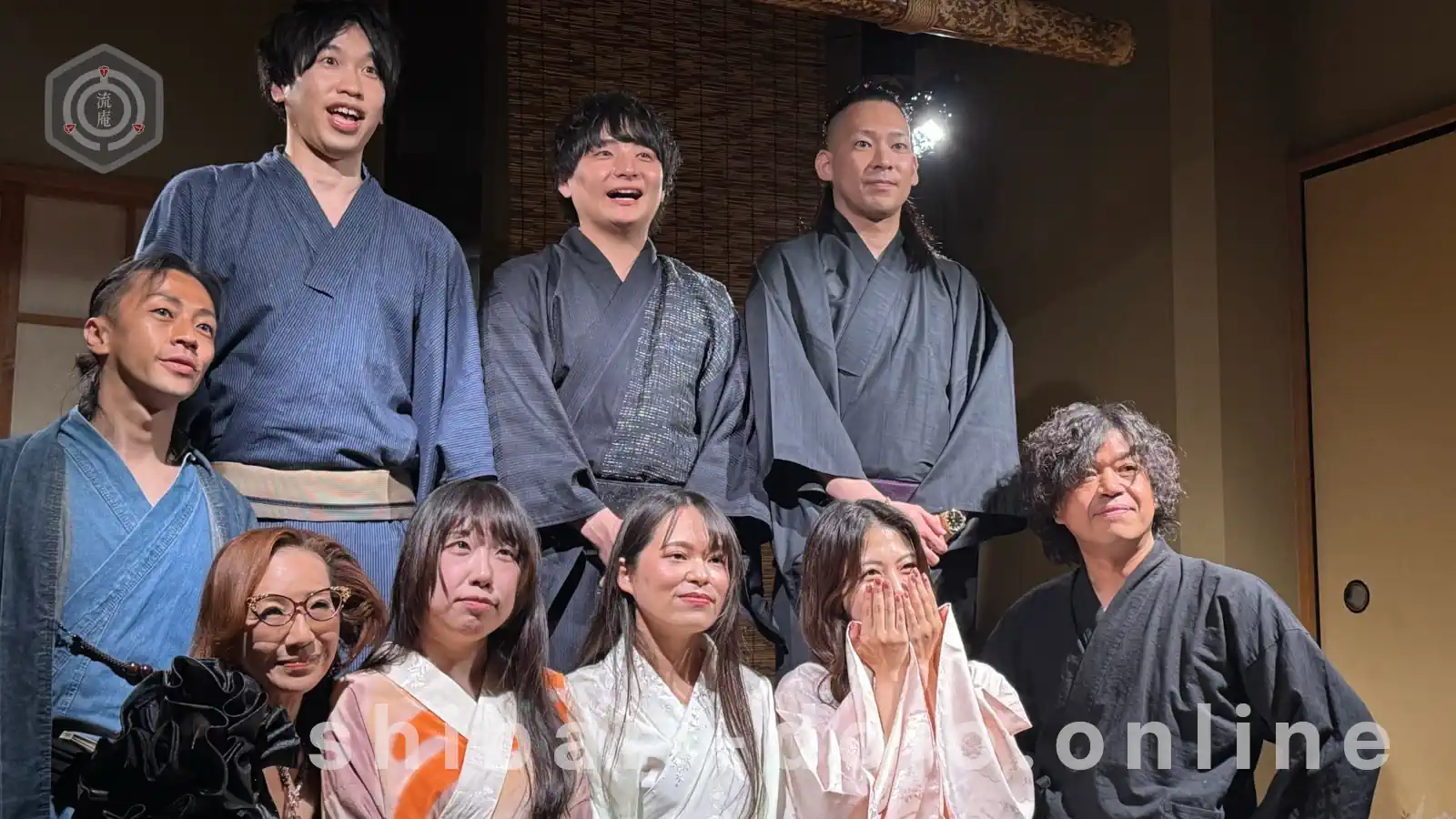
“Kokonawa” refers to a series of recurring events, occasionally held with a live audience but primarily streamed online via paid access available worldwide.
The series is produced and hosted by Marie Aoi (三代目 葵マリー), featuring Yagami Ren and Tenma Haru as expert voices and mentors supporting the young rope artists.
The first edition was a hybrid event—live and streamed—featuring technical support from the production company DOGMA and performances by Yagami Ren, Tenma Haru, Yuki, and Sora.
It consisted of live demonstrations interspersed with interviews. The event sold out, and notably, drew a large number of young attendees, including many women.
A second edition followed in 2024, this time fully online via the FC2 streaming platform, featuring Sora, Yuki, and BEST (now Tenga Jin), each presenting a 40-minute show.
Since then, multiple editions have been held each year, turning Kokonawa into a key platform where this group showcases its style and evolution.
Tenga Jin (天我迅)

Previously known as BEST, he adopted the stage name Tenga Jin (天我迅) in 2025.
“Tenga” comes from the phrase “Tenjo Tenge Yui Ga Dokuson” (“Above heaven and earth, I alone am honored”). “Jin” is drawn from “Shippū Jinrai no Jin” (the speed and force of a storm). He chose it because it sounds fast and striking.
He practices Tenga-ryu (天我流), a style inspired by Yagami-ryu (鵺神流).
He trained within the circle of Yagami Ren and Tenma Haru, particularly under the guidance of Manabu (まなぶ), a former Yagami-ryu instructor in Tokyo.
He debuted as a professional performer in 2023 and took part in around 40 events in 2024. He mainly performs in Tokyo, but also in Nagoya and the Kansai region. He is a regular on the Tokyo and Osaka scenes, frequently appearing in SM clubs and bars.
In his own words, his shows are “built around the theme of ‘distorted love’ (歪な愛), grounded in traditional Japanese aesthetics (‘wa’, 和). The goal is for kinbaku to stand as entertainment in its own right—not just be inserted into entertainment.”
He is supported by Nagare Aotsuki (蒼月), manager of the Arcadia club group, and by historical Kabukicho figures such as the late Bingo Shigonawa (紫護縄びんご) of UBU.
Sora (蒼空)
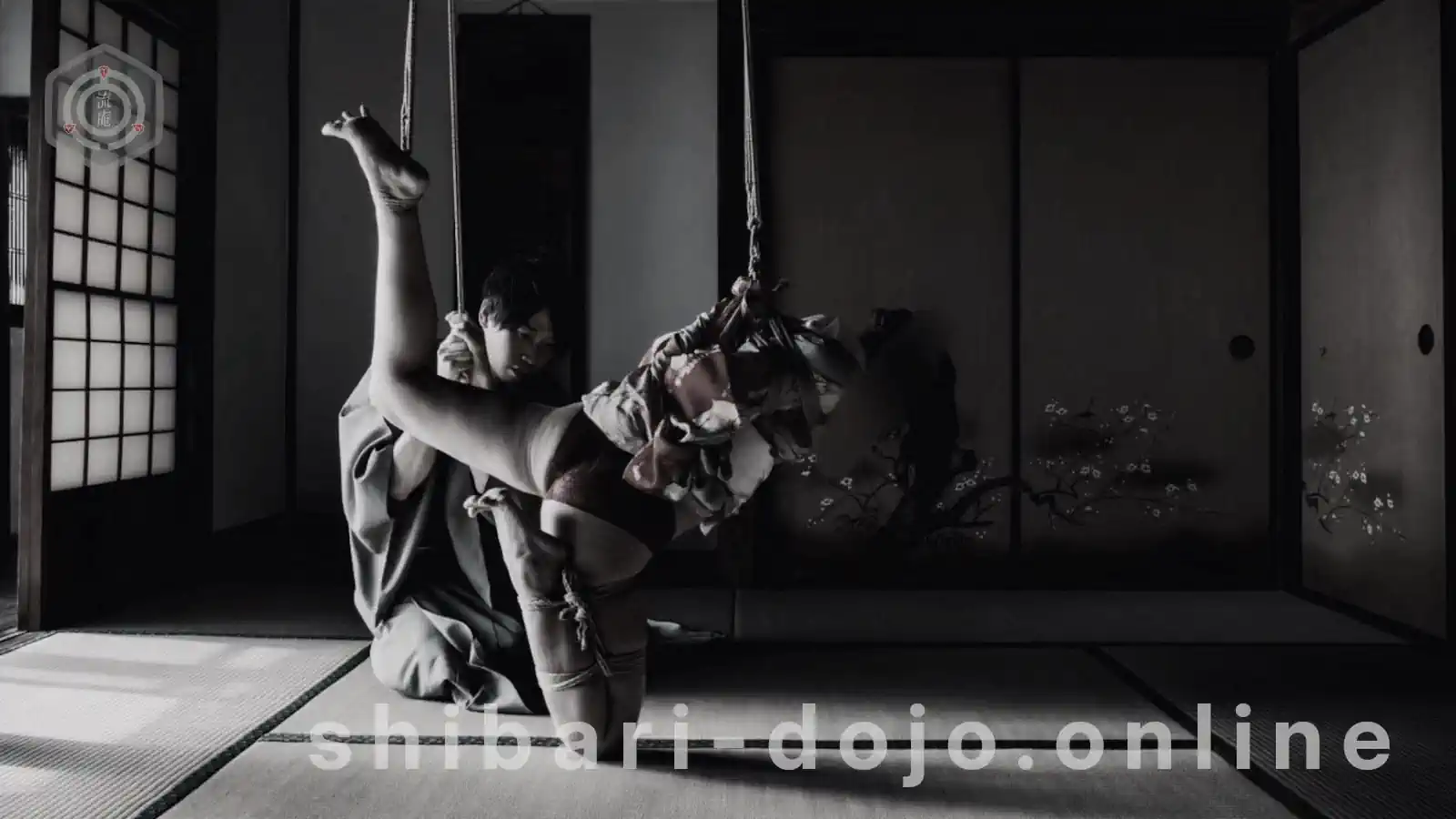
A direct disciple of Tenma Haru, Sora practices Tenma-ryu and works as an instructor at the Genso Nawa Kai salon in Yokohama.
He specializes in combining semenawa with no-iki (brain orgasm).
According to him, he was drawn to the Tenma style because every rope has a clear purpose and meaning.
His main profession is as a host in the women-focused erotic service industry (女風俗), where he has worked successfully for over seven years as a male “therapist” at the establishment Kindan no Kajitsu -RINGO- (“Forbidden Fruit”), where he is often a top-billed performer.
He debuted as a performer in 2019 at “Onawa DX” in Kabukicho and joined the Kokonawa staff in 2024. That same year, he was introduced at the Tokyo Kinbaku Expo as one of the scene’s rising talents.
He frequently participates as a co-instructor in Tenma Haru’s workshops across Asia.
Yuki Scream (ゆきすくりーむ♂)
He entered the world of shibari in June 2020. Before that, he was involved in off-pakora (private encounters). He is a regular rope artist at the TittyTwister club in Tokyo.
He is also part of the Kokonawa team.
Miss Lina (緊縛師)
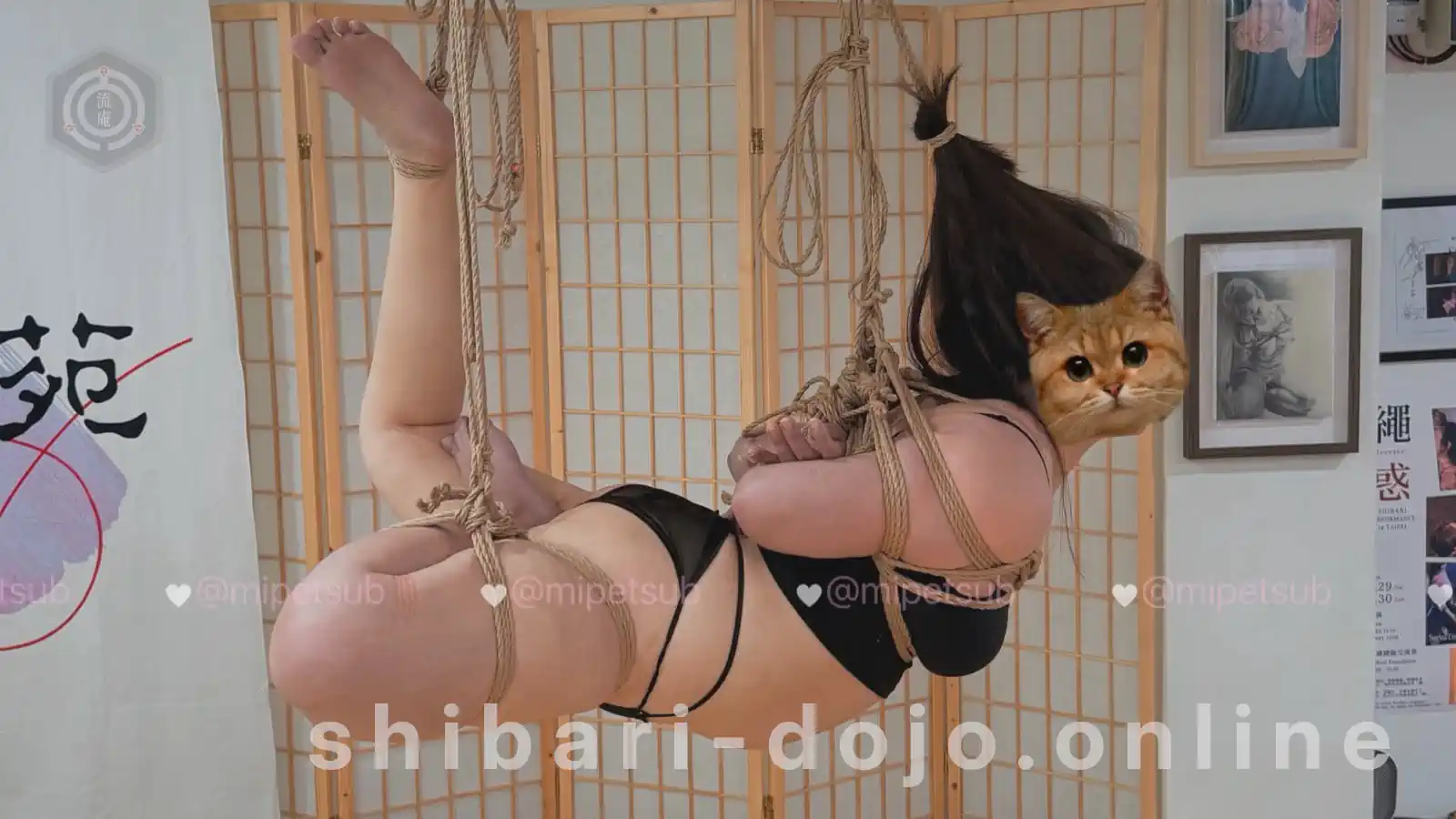
A Taiwanese rope artist and apprentice of Tenma Haru and Sora.
She works as a Chinese interpreter and organizes Tenma-ryu workshops in Taiwan, where she also coordinates regular shibari events.
In her own words, she follows the spirit of Tenma-ryu in her kinbaku journey: “Think about the tie, think about the one who ties, think about the people.”
The Weight of Tradition
In Japan, as elsewhere, there is a common mindset: if something works, do not change it.
This entire group operates as apprentices to senior rope artists, adopting and internalizing their respective styles. The industry is largely controlled by conservative figures who prefer to preserve what has worked since the 1980s—an approach that has generated significant income through international tours.
This traditional conservatism also extends to the training system, which is based on repetition: copying the master’s ties over and over until achieving a perfect replica.
It is a very Japanese way of thinking and working, but it does not translate well to a contemporary Western context that values differentiation and personalization.
In disciplines like shibari, this teaching model does little to help the technique evolve or address longstanding issues, such as the risks of abuse or injury.
It was precisely this rigidity in Japanese teaching methods that led us, at the beginning of the Reiwa era, to develop our own shibari teaching method: #MSAFE.
No-iki (脳イキ): “Brain Orgasm”
The term no-iki can be translated as “brain orgasm” and falls within the realm of ASMR (Autonomous Sensory Meridian Response).
It is a somewhat elusive phenomenon, to put it mildly, and like hypnosis, it depends on the subject’s susceptibility to suggestion.
Its effects are described as a sense of relaxation or mental haze, often induced through whispers, soft sounds, and slow, repetitive movements.
Used responsibly, it is just another technique—no more harmful than listening to white noise to fall asleep or relax.
However, in contexts like shibari—where behavior, perception of reality, and judgment can already be influenced by both the rigger and the setting—it can pose a risk. The combined sensory and emotional effects, along with the expectations placed on the person being tied, can make them more vulnerable to coercion or to adopting behaviors not driven by their own desire, but by the context.
It is important to note that these rope artists operate within professional service environments, working with clients—a reality quite different from what most Western shibari practitioners are used to.
Sora himself described his approach to sessions as follows:
“Only when they are tied with rope do they no longer need to think about anything. They can hand everything over to the person tying them and simply feel the rope. It is okay to fall apart. Precisely because they are bound and immobilized, the heart can become free. That is one of the appeals of rope. For people who are always tense and trying hard to get through life, it is a moment to release that effort and return to their true self.”
In many cases, clients seek these services as a way to escape—an opportunity to disconnect from stress and everyday concerns.
At Shibari Dojo, we are not opposed to professional services related to sex. However, we do emphasize the wide range of risks that can arise from their misuse or from unhealthy patterns of engagement.