Did the Victorian "English discipline" and "French vice" play a decisive role in the flourishing of shibari as we know it in early twentieth-century Japan?
Are the fetishization of the exotic and jap-exploitation relevant factors in shaping how bondage has been understood and lived in the West?
To answer the first question — about the weight of Western influence on the emergence of what we call shibari in Japan — we recommend first reading the articles and lessons available on the site covering its origins and historical evolution.
The short answer: yes, Western influence is decisive.
Both through the technological developments that enabled the rise of an adult content industry and the social shifts that drove local consumption of it, and through the introduction of an entire set of legal and moral values that defined shibari's initial characteristics.
Through the selective and self-serving application of Victorian laws and moral norms, Japan saw a clear division emerge between the public sphere — predominantly male — and the private sphere, where women were confined. In shibari, the subversion of this moral value takes the form of the forced exposure of the female body.
To be precise, as early as the eighteenth and nineteenth centuries, erotic works and materials depicting bound women and what was then known as bondage were already circulating among the European upper classes.
One early example is the French photographer Charles Jeandel, who in the final years of the nineteenth century focused his work on naked, bound, suspended, and gagged women.
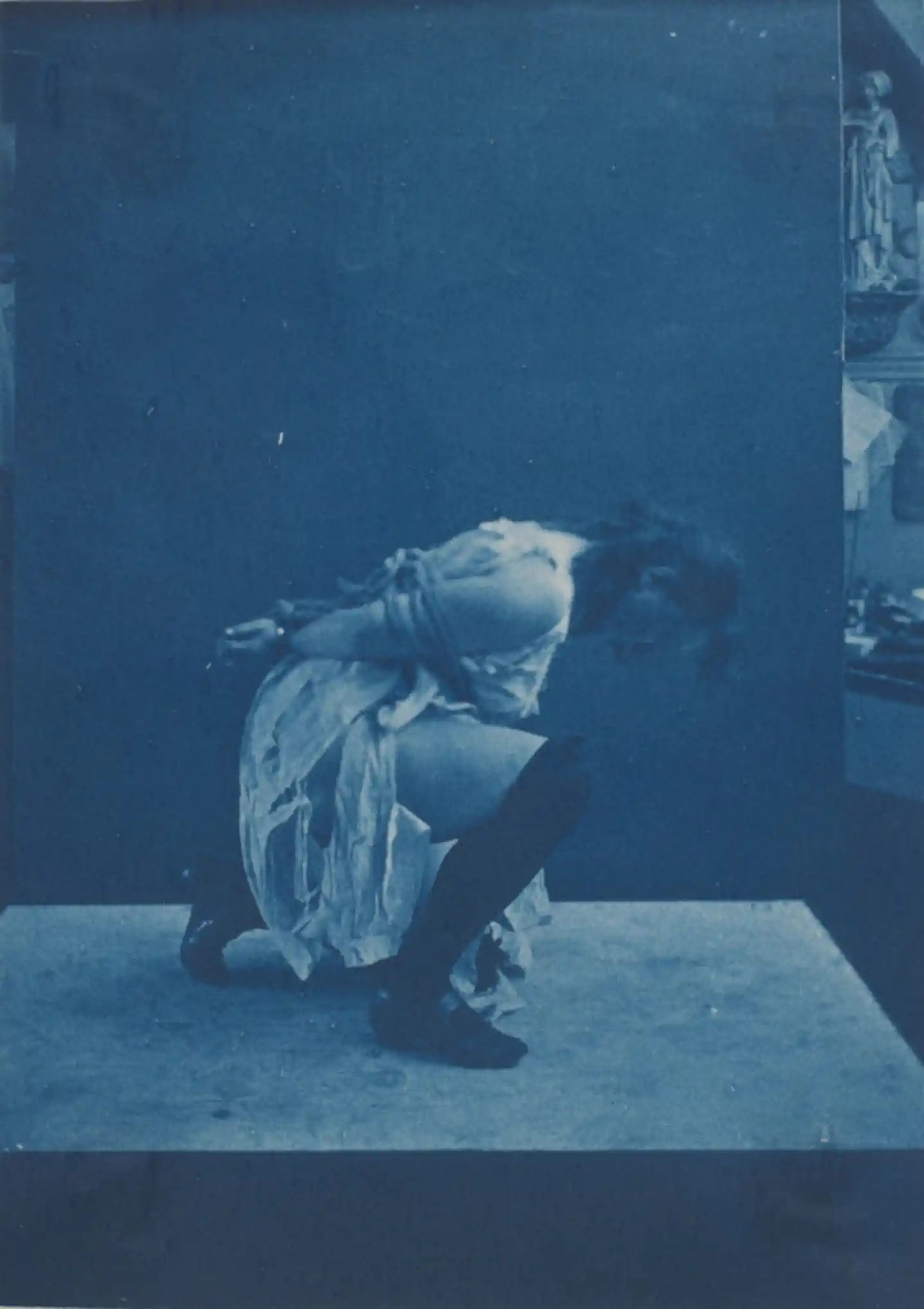
The collection dedicated to him at the Musée d'Orsay holds nearly two hundred cyanotypes — a precursor technique to photography — of erotic bondage subject matter.
Be that as it may, by the start of the Second World War Japan already had a well-established industry centered on producing what we now call shibari. When the conflict ended, the occupation period gave rise to a fascinating phenomenon of cultural transfer and social transformation on both sides of the world.
Europe, divided and devastated by war, began a process of economic recovery and moral renewal in the shadow of the victorious United States — newly consolidated as the cultural capital and reference point of the "free world."
This shaped the very different ways in which "Japanese bondage" would be approached during the second half of the twentieth century.
As for the rest of the American continent, there is little clear evidence of bondage spreading as a practice through erotic literature and publications — mainly clandestine, and reserved for the "literate few" — during the eighteenth and nineteenth centuries.
The sparse references to bondage place it in a context of domination and punishment, likely tied to the manumission processes of the era and the erotic fantasies they generated.
The articles referenced in the footnotes examine the different legal and social conditions in Japan and the United States at the end of the war, and how these proved decisive in allowing the shibari subgenre to cross the Pacific.
Those legal constraints — strict prohibitions — along with shibari's inherently pornographic nature make it difficult to trace exactly how these materials arrived and spread, but there is broad consensus around the following points.
During the American occupation period — the late 1940s and throughout the 1950s — there was a frequent cross-Pacific exchange of publications, with early mutual influence between Bizarre and Japanese publications, as covered in our article on Kitan Club.
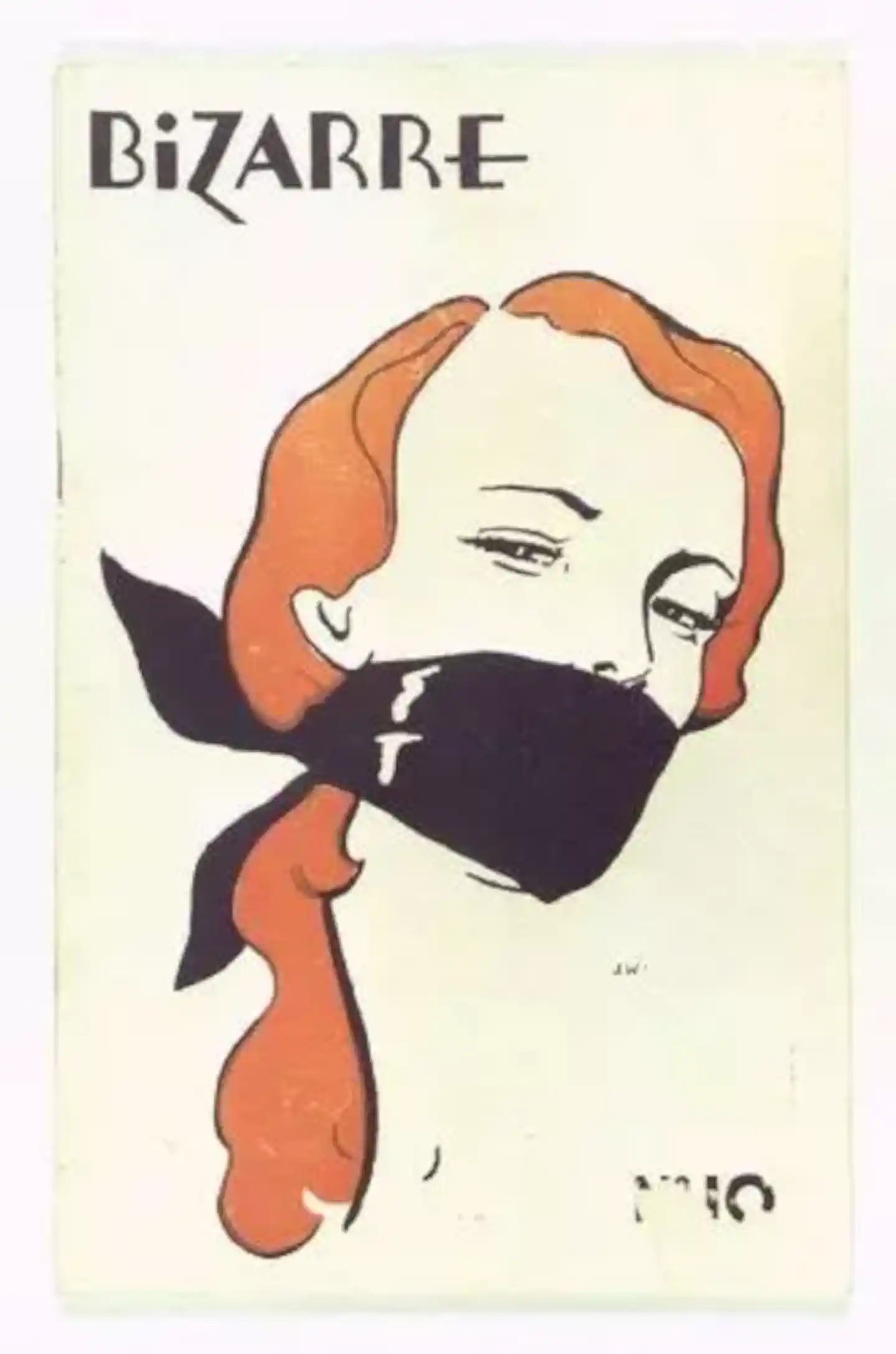
After this initial period, however — driven by the evolution of both Western and Japanese society, and by the semi-clandestine nature of these erotic practices — the trail seems to fade.
In the mid-1970s, Flower and Snake (花と蛇, Hana to hebi) was released and gained some traction in underground cultural circuits.
Although roman porno was a thriving genre in Japan at the time, its reach in Europe was severely limited by censorship, lack of distribution, and the language barrier.
In the early 1980s, tentative connections formed between sadomasochism clubs and associations in North America and Japan, within the context of counterculture and alternative sexualities.
It wasn't until the early 1990s that French artist Romain Slocombe met Nureki Chimuo, which opened the door to shibari entering European artistic circles.
In 1995, Nagaike Takeshi (長池士) became the first Japanese rigger to be published in the United States, through a photo book by Ken Marcus. His subsequent trip to California marked the beginning of shibari's rise in North American alt-sex communities.
The work of artists such as Dan Oniroku, and the striking performances of Akechi Denki, took advantage of this opening and managed to reach what was still a niche audience.
It wasn't until the rise of home video, in the second half of the nineties, that shibari-themed adult films began appearing in specialist stores.
Particularly notable is Bondage of the Rising Sun, by Ernest Greene (1950–2024), who was responsible for a significant share of bondage-themed productions and their popularization in the U.S. through platforms such as Hustler Taboo, Kink.com, and Adam & Eve.
It was through Ernest Greene that Midori entered the adult industry. Her book The Seductive Art of Japanese Bondage (2001) proved a genuine turning point in the study and wider dissemination of shibari throughout the West.
A couple of years earlier, Akechi Denki had done much the same in Europe through two visits that cemented his style as a key reference on the continental scene.
With the turn of the millennium, Shibaricon launched in the U.S. in 2002 — a convention that proved pivotal in spreading shibari across North America, welcoming figures including Saki Kamijoo (2013), Kazami Ranki (2014), and Nawashi Kanna (2015).
In Canada, it's worth noting the early presence of dojos and instructors dedicated to both the Kazami and Naka styles, the latter largely through Isabelle Hanikamu.
In the second half of the 2000s, workshops and events began to be organized across various European countries.
Osada Steve led several workshops in Berlin (from 2005 onwards), where Felix Ruckert (Eurix) soon emerged as a key event organizer.
Arisue Go visited northern Europe on several occasions, with documented activities in 2009 and 2010.
Without question, the turning point for Europe was the London Festival of the Art of Japanese Bondage, held between 2009 and 2013 and presented by Esinem.
This event introduced the "new generation" of riggers — names like Kinoko and Yagami Ren, who would go on to tour the continent extensively in the following decade.
During the same period, the European and American tours of Yukimura Haruki — while his health allowed — and Akira Naka's appearance at Moscow Knot in 2013 deserve special mention.
It's also worth noting that the growing reach of the internet played a major role in spreading shibari worldwide — Yahoo mailing groups, Twitter, IRC channels, forums, and various web platforms brought this erotic practice to a much wider audience.
In Spain, shibari began to take shape in the final years of the twentieth century and the early 2000s, closely tied to the BDSM scene of the time — largely thanks to Kurt Fisher, whose Club Rosas5 (2002) was undoubtedly the single biggest driver of shibari in the country.
He organized the first workshops — including Osada Steve's in Barcelona (2010) — and events such as 48/7 in Madrid, where a small circle of enthusiasts moved through the legendary venues Garage, Fetterati, and Dark Sabbat. It was there, with Davide, that a workshop with Esinem was held in 2012.
By the early 2010s, active shibari groups existed in Andalusia, Asturias, Barcelona, Madrid, Valencia, and a number of other cities, always anchored to local spaces and organizers.
As for my own part in all this: on May 6, 2011 — at the very bullfighting hour of five in the afternoon — I opened the Nawakai in Gijón as a space dedicated to the practice and spread of shibari, and as the seed of what would become the dojo.
Riggers who came through to share their technique in performances and workshops included Mark Yu, Yukinaga Max — a student of Yukimura — and Hajime Kinoko during his 2014 European tour, until we moved to a new space in 2015 and temporarily adopted the name Kinky Club.
There, after organizing workshops with the then-disciples of Naka — Riccardo Wildties and Isabelle Hanikamu — we met Yagami Ren in 2016 and found our direction in his style.
During that period, other venues and spaces emerged — and disappeared — across the Iberian Peninsula, while workshops and visits from riggers multiplied, including the packed masterclass by Akira Naka in Madrid in 2014.
Those years saw shibari expand across Europe at a remarkable pace — arguably driven by the ripple effect of the London festival, which forged real links between a flourishing Japanese scene and an eager European one.
People were traveling, sharing, and discovering Japanese bondage with a sense of genuine wonder.
Around the same time, in Argentina, Camelia Tsubaki opened her space in Buenos Aires after studying with Osada Steve and Yukimura. Prior to that, the shibari scene in the Southern Cone had been a small one, closely tied to the tattoo and body modification world.
In Mexico, a nascent scene was taking shape in the early 2000s, with figures like Takumi driving activity with considerable energy. During one of Saki Kamijoo's visits to the U.S., a workshop was organized in the capital.
And then COVID hit. Everything stopped. We moved online — and the rest you're living through yourselves.
This is not a precise, exhaustive, or detailed account — just a summary of what I've experienced, read, and been told. Any corrections or additions to the information gathered here are more than welcome.