During Japan’s period of rapid economic growth, love hotels became a distinctive part of the country’s urban landscape and popular culture.
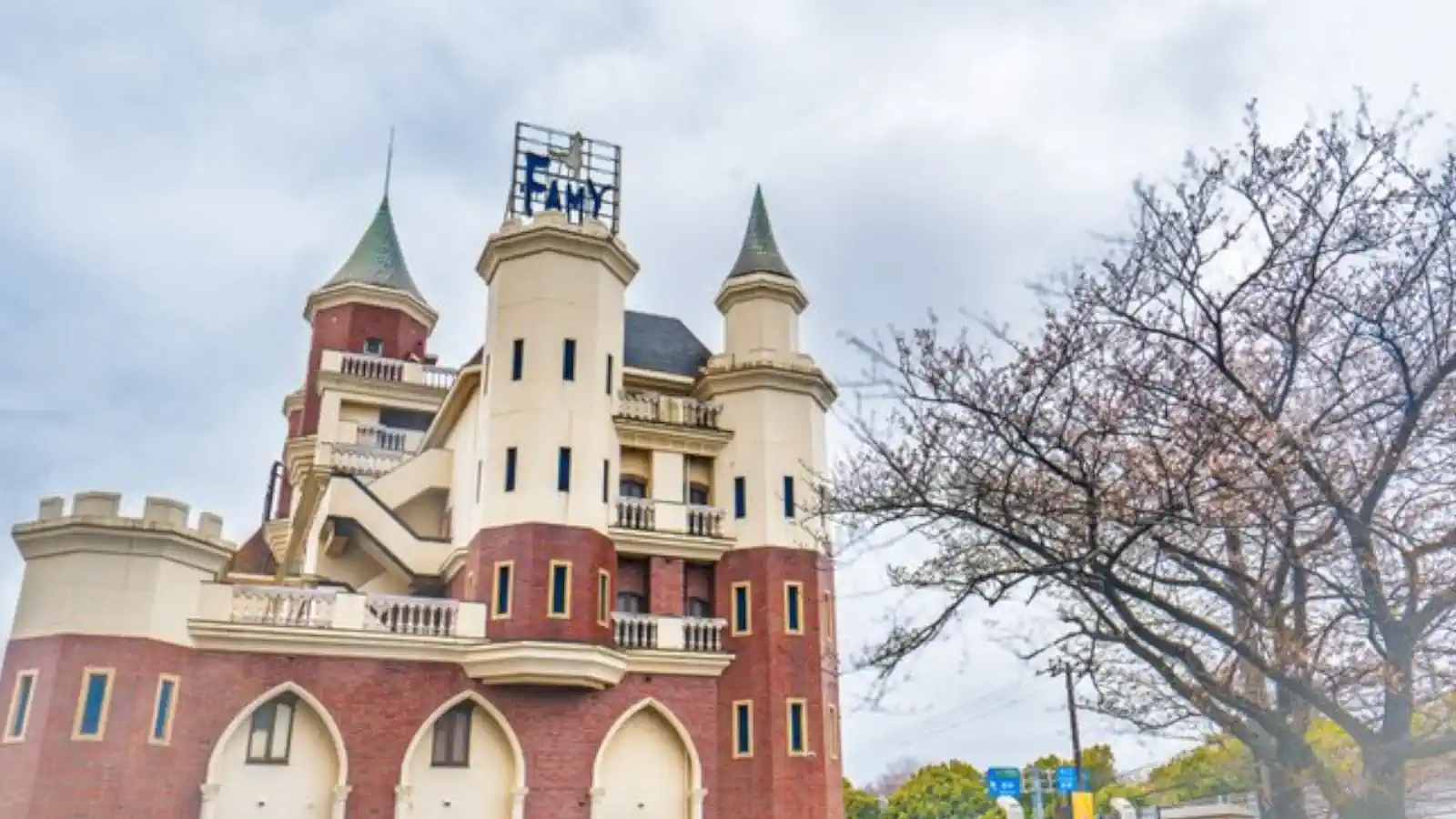
Some took the form of castles or European palaces; others created interiors resembling amusement parks, imagined journeys abroad, outer space, or worlds entirely removed from everyday life.
Despite the singularity of their architecture and interior design, however, these establishments have rarely been examined as part of the history of architecture and design. Their erotic dimension has generally received most of the attention, while the spatial, visual and technical complexity of many of these buildings has remained in the background.
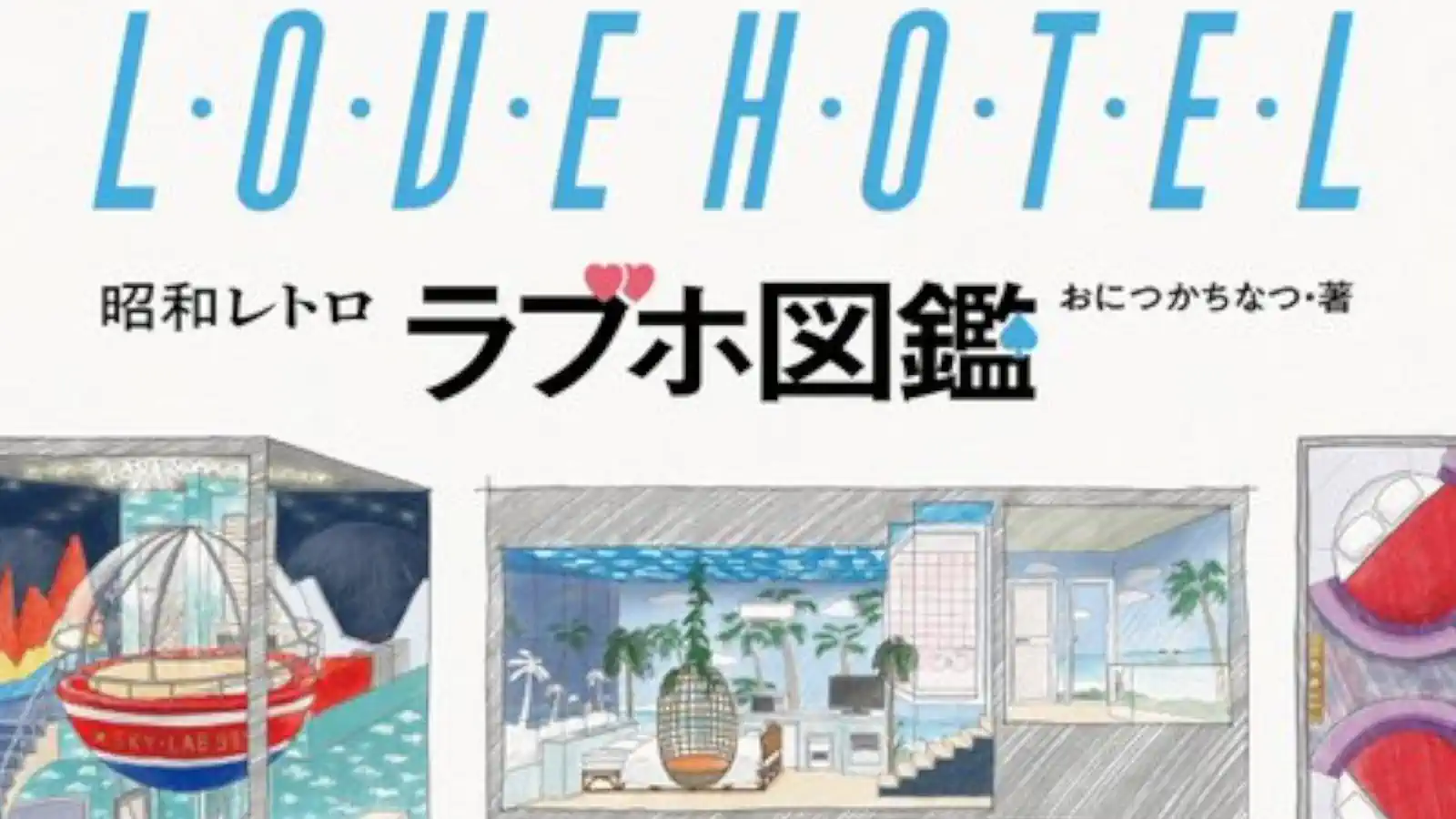
Showa Retro: An Illustrated Guide to Love Hotels ( 昭和レトロ ラブホ図鑑), by Chinatsu Onitsuka, approaches this heritage from a documentary and architectural perspective.
An Architectural Heritage at Risk of Disappearing
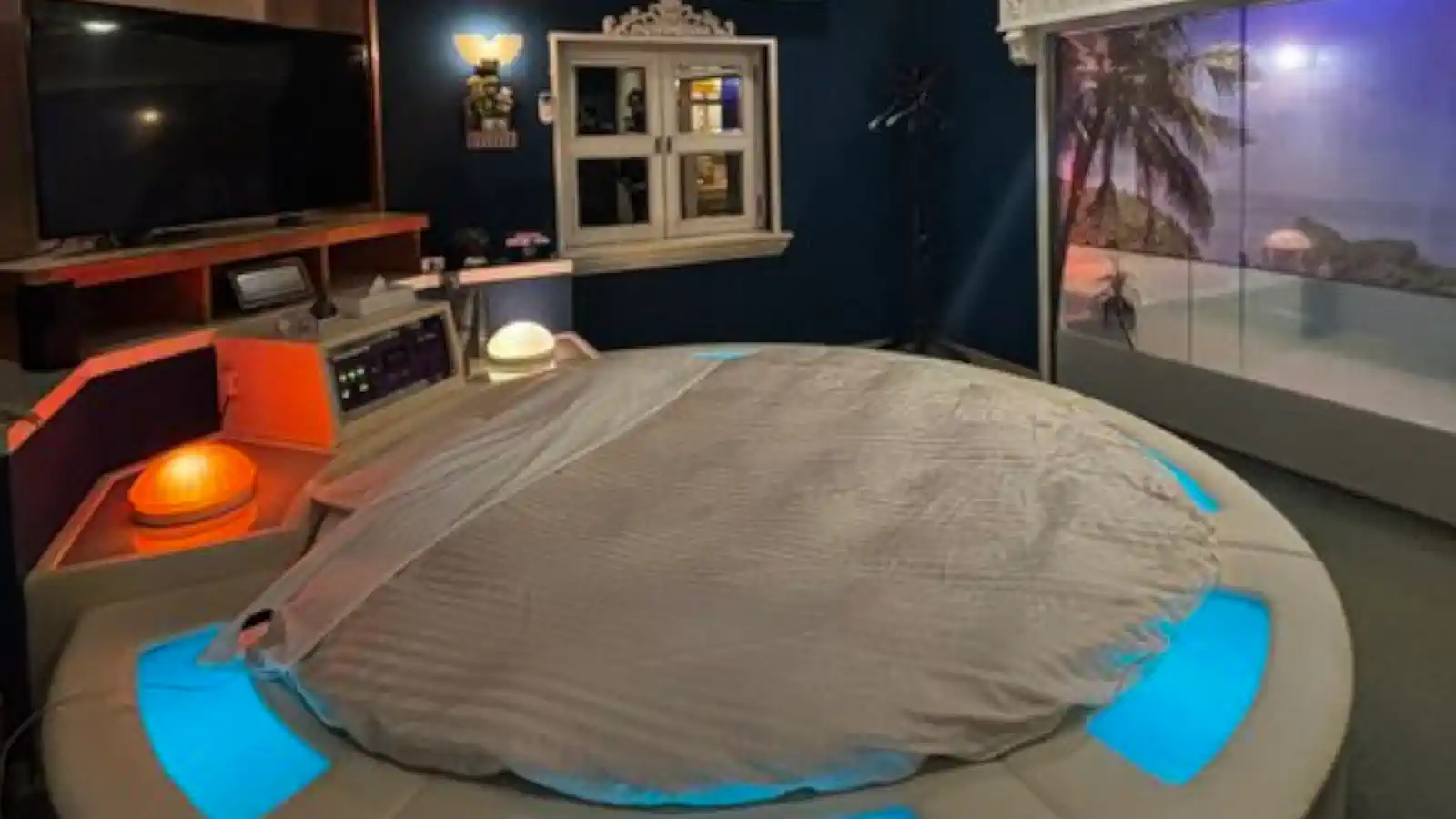
The development of love hotels was closely connected to the social and economic transformations of post-war Japan. From the 1960s and 1970s onwards, these establishments developed a distinctive architectural language, often characterised by theatrical façades and interiors designed as environments completely separated from the surrounding city.
Castles, palaces, futuristic spaces, themed rooms, neon lights, mirrors, rotating beds and environments designed to create an experience removed from everyday life all formed part of an architectural language rarely found in other forms of hospitality.
However, changes in legislation and shifting trends have accelerated the disappearance of many of these buildings. Some have been demolished without leaving behind a detailed record of their interiors, architectural solutions or design.
Onitsuka’s work is situated within this context. Her research begins with the need to document spaces that, despite having formed part of Japan’s urban landscape and popular culture for decades, risk disappearing without leaving behind an adequate record.
More Than Ten Years of Field Research
The author began researching the spatial design of love hotels in 2009 while studying at university. Since then, she has travelled throughout Japan, photographing and documenting establishments with particularly distinctive characteristics.
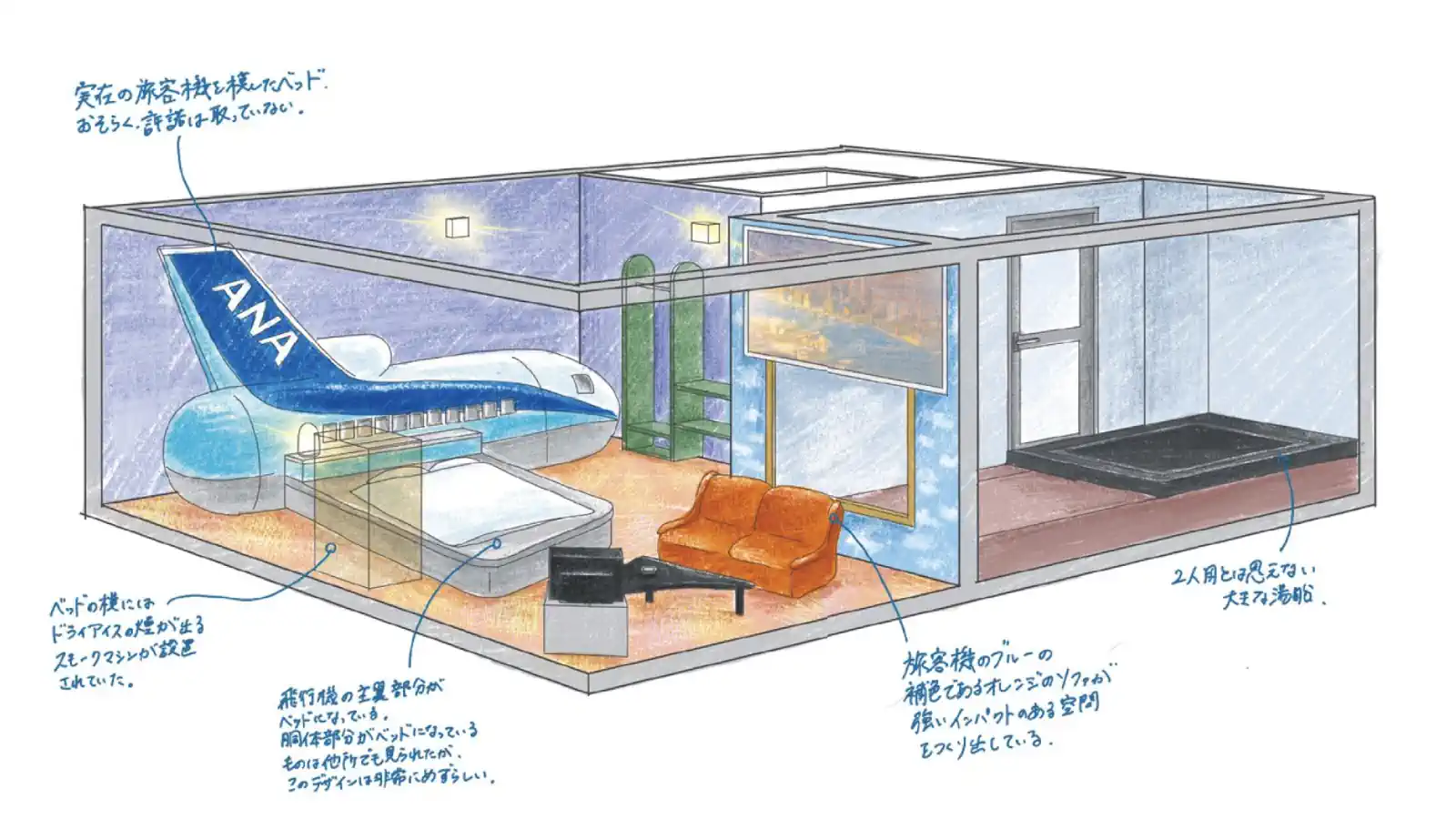
In Showa Retro: An Illustrated Guide to Love Hotels, this long-term research takes the form of a visual record combining photography, on-site measurements, sketches, plans and hand-drawn perspectives.
As a practising designer, Onitsuka approaches these buildings through direct observation of space. She used a laser distance meter for her measurements and also relied on her own bodily perception of the environment to understand scale. The illustrations include human figures that make it possible to relate the architecture visually to the presence and movement of people within it.
The result does not present love hotels from a sensationalist perspective. Instead, the book examines them as buildings: constructed spaces designed and organised according to specific architectural decisions.
Twenty-Two Love Hotels Between Memory and Disappearance
The book brings together 22 establishments, ranging from hotels that remain in operation to legendary venues that have already disappeared.
This combination of surviving and vanished buildings reinforces the documentary character of the project. The book does not simply present a selection of striking interiors; it records part of the evolution of a type of architecture closely associated with a particular period in Japan’s recent history.
The research shows how these establishments developed spatial solutions far removed from conventional models of hospitality. The façade could act as a visual promise of what awaited inside, while the interior created an autonomous environment, isolated from the outside world and organised around the construction of a coherent atmosphere.
In many cases, the aim was to eliminate any element that might return the visitor to everyday life.
From Fairy-Tale Castles to Outer Space
The structure of the book organises its selected establishments around different architectural and thematic imaginaries.
The journey begins with an introduction to the origins of love hotels and their spatial transformations. From there, the chapters explore different ways of constructing experiences through architecture and interior design.
These include love hotels designed in the form of fairy-tale castles, spaces inspired by the idea of travelling abroad, and establishments that take the construction of imaginary worlds towards the sky and outer space.
Another chapter focuses on venues that visually resemble amusement parks, while the final section examines spaces constructed through the extensive use of glass and mirrors.
This organisation makes it possible to understand the diversity of references employed by their designers. Love hotels did not follow a single stylistic model; instead, they developed multiple ways of creating environments and experiences through architecture.
Hotel Alphain
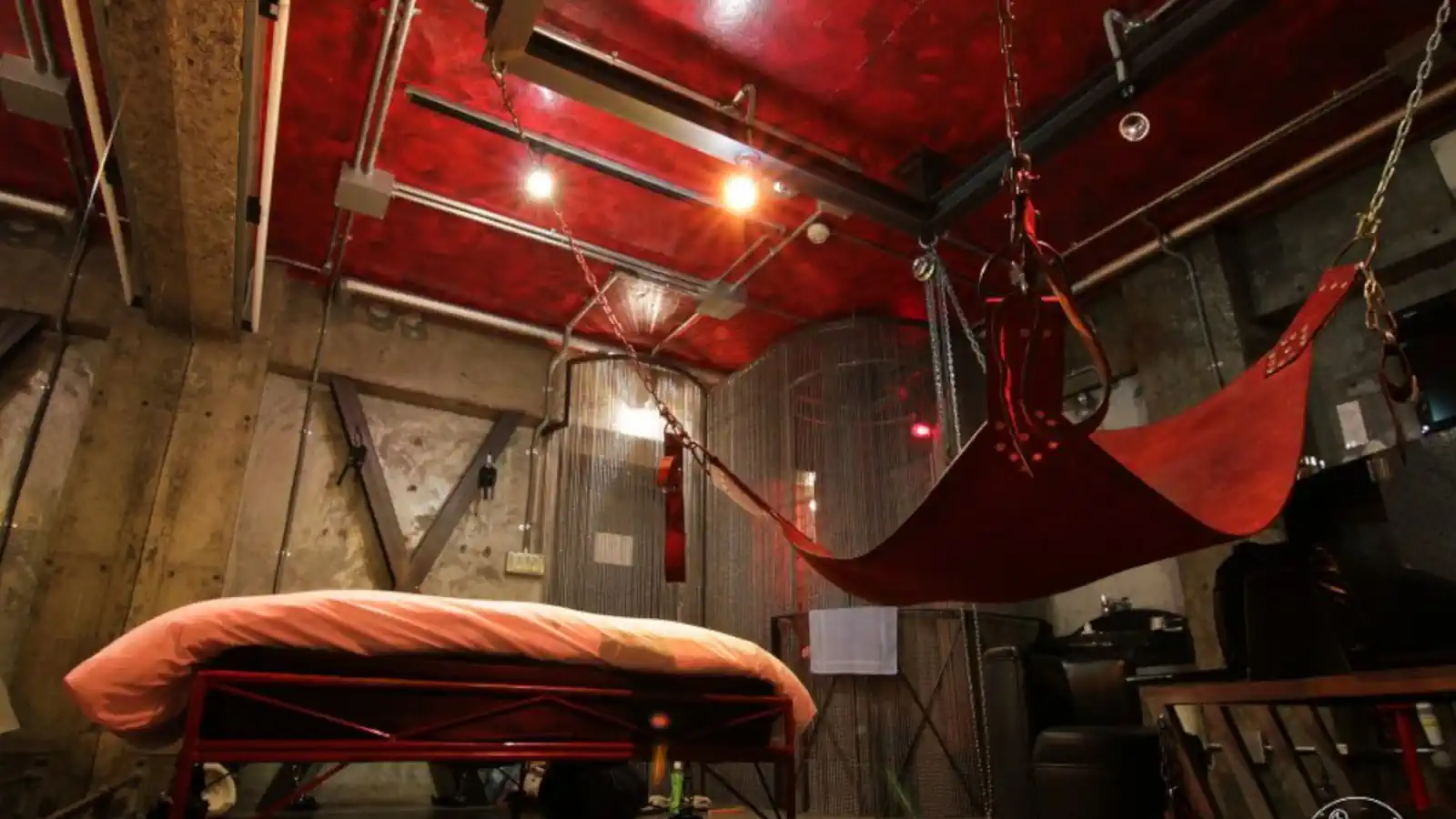
Among the establishments documented in the book is Hotel Alphain, located in Higashi-Azabu, in Tokyo’s Minato district.
Specialising in SM-themed rooms and environments, the hotel is one of the examples examined in greater detail by the author. Onitsuka carried out measurements and produced sketches of its interiors, documenting a space characterised by the continuity of its aesthetic language.
The contrast between the surrounding urban environment and the interior of the hotel forms part of its spatial experience. From the entrance to the details of the rooms, the establishment creates a coherent world in which almost no element refers back to the outside world or to everyday life.
According to the approach presented in the book, this aesthetic continuity is fundamental to understanding how these establishments function. Architecture does not merely act as a container, but as part of the experience created by the space itself.
A Career Dedicated to Documenting Love Hotels
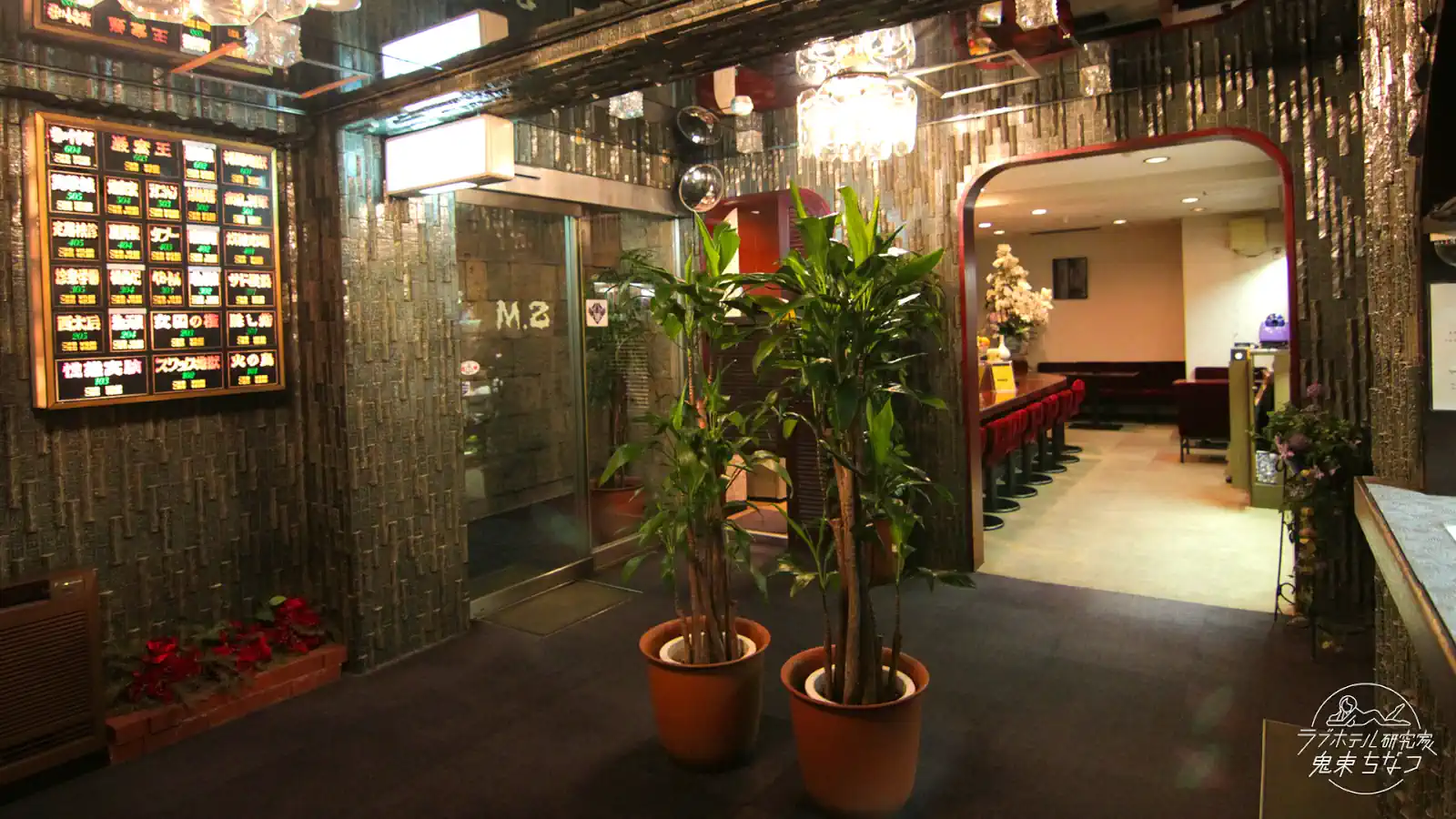
Born in 1989, Chinatsu Onitsuka has spent years developing work focused on the photography and documentation of Japanese love hotels.
Her previous publications include Love Hotel Collection (Aspect, 2012) and Encyclopedia of Love Hotels from Japan’s Showa Era (Tatsumi, 2015), both connected with the photographic documentation of these establishments.
The publication of Showa Retro: An Illustrated Guide to Love Hotels represents a continuation of this research. In this case, the project expands beyond photographic documentation through drawings, plans, measurements and architectural observations made directly in the buildings themselves.
Architecture, Design and the Memory of the Showa Era
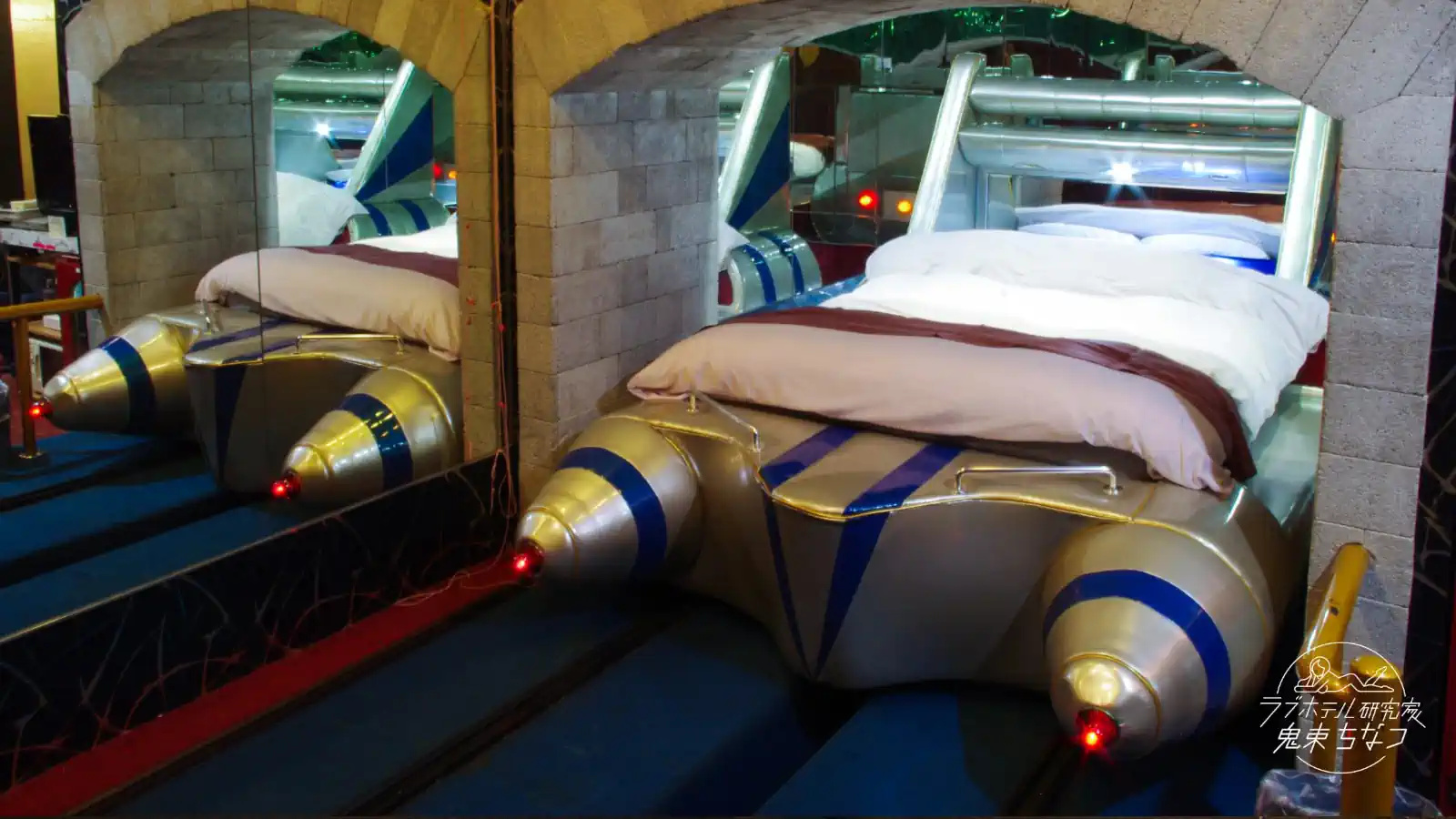
The book’s main interest lies in its approach to love hotels as part of an architectural and cultural heritage that has rarely occupied a central place in the history of Japanese design.
The work makes it possible to examine these establishments beyond their function. Their façades, layouts, interiors and decorative resources reveal a particular way of understanding commercial architecture and the design of experiences during the Showa era.
As many of these buildings disappear or undergo significant transformation, the act of documentation also acquires an archival dimension. Photographs, sketches and measurements preserve information about spaces that, in some cases, no longer exist.
Showa Retro: An Illustrated Guide to Love Hotels is therefore a visual and documentary study of a distinctive form of architecture within contemporary Japanese culture. It will be of particular interest to readers interested in Japanese architecture, interior design, subculture and the history of entertainment during the Showa era.
The book, published by Ikaros Publications, is available through Amazon and physical bookstores in Japan.